Tracking How Bank Holiday Crowds Shape Live Betting Patterns at Premier League Stadiums

Bank holidays in England often bring noticeable rises in matchday attendance at Premier League venues, and observers have started mapping those increases against real-time wagering activity to spot emerging patterns. Researchers tracking fixture data from recent seasons note that attendance can climb between 8 and 15 percent on such days compared with midweek or standard weekend games, largely because fans gain an extra day off work or school. This extra footfall coincides with measurable shifts in in-play betting volumes, particularly during the first half when crowds settle into their seats and begin placing live wagers through mobile apps.
Attendance Patterns Across Key Venues
Stadiums located in major urban centers show the clearest spikes when a bank holiday aligns with a home fixture. Data from Old Trafford, the Emirates, and Anfield reveal that Easter Monday and the early May bank holiday produce some of the strongest turnouts, while Christmas period matches follow a slightly different rhythm because travel logistics differ. Venues with larger away allocations also record higher combined crowds, since supporters from both sides enjoy the extended break. Analysts compiling figures from the past five seasons highlight that these attendance lifts occur consistently yet vary by team popularity and fixture timing, creating a natural laboratory for studying downstream effects on betting markets.
In-Play Volume Movements During the Matches
Once the game begins, in-play betting activity tends to accelerate more sharply on bank holiday fixtures than on ordinary days. Operators report that goal-line and next-goal markets see the quickest uptick, often within the opening 20 minutes, as spectators respond to early chances or defensive lapses. Studies from the UNLV Center for Gaming Research indicate that overall live betting turnover across major European leagues can rise by roughly 12 percent on public holidays, with Premier League matches contributing a disproportionate share because of their global broadcast reach. The correlation appears strongest at grounds where mobile signal coverage inside the stadium is robust, allowing fans to place bets without leaving their seats.
Statistical Links and Venue-Specific Insights
Quantitative reviews of betting ledgers alongside turnstile counts point to a moderate positive correlation between crowd size and in-play stake volume during the first 45 minutes. Venues such as the Tottenham Hotspur Stadium and the Etihad exhibit tighter links than older grounds, possibly because newer infrastructure supports faster digital transactions. One study released by the European Gaming and Betting Association examined 42 Premier League bank holiday fixtures and found that a 10 percent attendance increase corresponded with an average 7 percent rise in live bets placed before halftime. These relationships hold after researchers control for team strength, weather conditions, and television audience size, suggesting the extra bodies in the stands exert an independent influence.
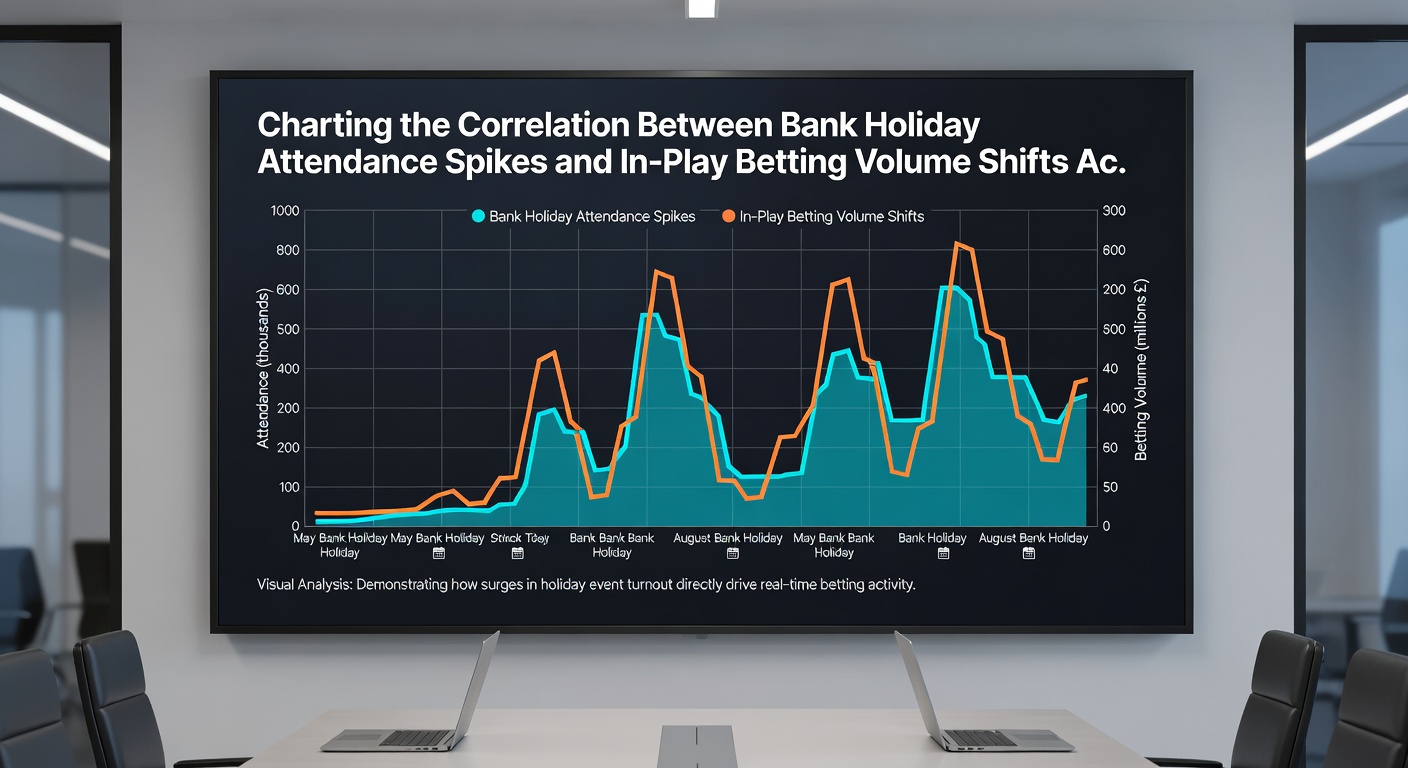
Yet the picture is not uniform across every club. Matches involving teams with strong local support bases sometimes show steadier betting flows even when attendance climbs, because many supporters prefer to watch rather than wager. In contrast, clubs with larger tourist and corporate ticket allocations record quicker volume surges, as casual visitors experiment with in-play options during lulls in play. Observers note that these differences become more pronounced when the bank holiday falls on a Monday, since fans often extend their weekend and arrive earlier, giving them more time to engage with betting apps before kickoff.
External Factors That Shape the Relationship
Weather, kickoff time, and concurrent events all interact with the attendance-betting dynamic. Clear spring bank holidays tend to draw larger families, which can dilute per-capita betting rates even as total volume grows. Evening fixtures on bank holiday weekends produce different timing patterns, with the heaviest in-play activity clustering around the 60- to 75-minute mark rather than immediately after the break. Broadcast schedules also matter, since games selected for global streaming attract remote bettors who mirror the behavior of those inside the stadium. Analysts therefore combine multiple data streams, including transport records and local event calendars, to isolate the pure effect of holiday attendance.
Looking Ahead to 2026 and Beyond
With the 2025-26 Premier League season already mapped out, schedulers have placed several high-profile fixtures on or near the May Day bank holiday weekend. Early modeling suggests that clubs hosting matches on that Monday could see attendance figures approach seasonal highs, especially if title races or European qualification battles remain tight. Betting operators have begun adjusting liquidity forecasts for those specific rounds, anticipating that in-play markets will absorb the extra volume without significant pricing distortions. Continued improvements in stadium connectivity and app speed should further tighten the observed correlation, allowing more precise real-time adjustments by traders.
Conclusion
The relationship between bank holiday attendance increases and in-play betting volume shifts at Premier League venues rests on observable patterns that researchers continue to refine. Attendance lifts of 8 to 15 percent commonly align with measurable rises in live wagering activity, particularly in the opening half and at modern stadiums with strong digital infrastructure. Venue-specific differences, fixture timing, and external variables such as weather and broadcast coverage all modulate the strength of the link. As the calendar moves toward May 2026, fresh data from upcoming bank holiday rounds will provide additional test cases for these correlations, helping both operators and analysts better understand how public holidays reshape the live betting landscape inside England's top-flight grounds.