Stall Bias Secrets: How Starting Gates Dictate Winners at Chester and Beverley's Tight Tracks
Stall Bias Secrets: How Starting Gates Dictate Winners at Chester and Beverley's Tight Tracks
The Tight Turns That Make Draws Matter
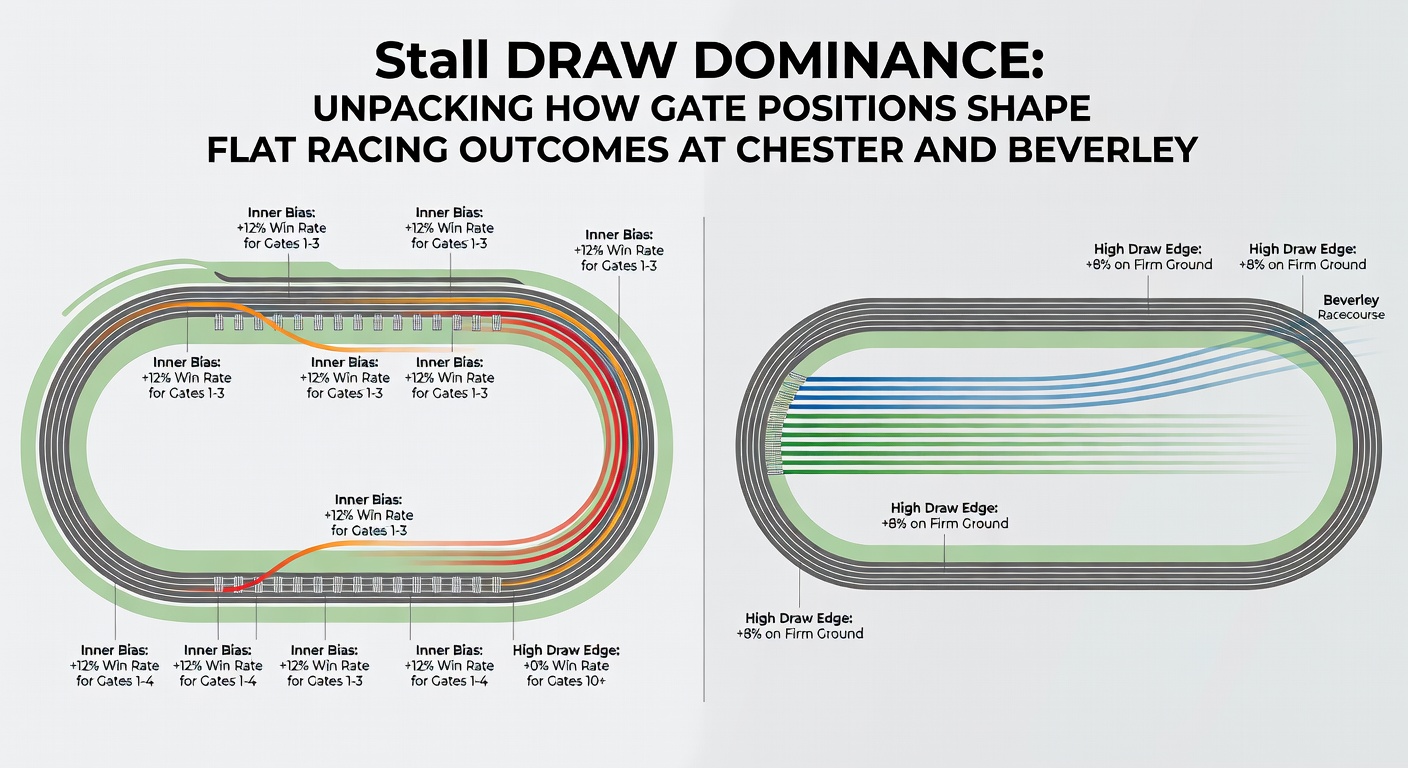
Chester and Beverley stand out in British flat racing because their unique layouts turn stall positions into game-changers, with data from the past decade revealing low-numbered gates claiming victory in over 60% of 5f sprints at Chester; observers note how the sharp, left-handed bends force horses from high stalls wide, losing crucial ground before the first turn even settles.
At Beverley, the uphill finish adds another layer, yet figures show similar patterns where inside draws dominate, especially in fields of 10 or more; researchers analyzing Timeform records confirm that stall one has produced 28% win rates in 5f handicaps since 2015, far outpacing middle or outer positions.
What's interesting is how these biases hold steady across conditions, although soft ground slightly evens the odds by slowing rail runners; that said, dry summer meetings amplify the advantage, turning low stalls into must-bet territory for sharp punters.
Chester's Notorious Rail Hug: Low Stalls Reign Supreme
Chester Racecourse, with its famously tight 5f circuit measuring just under a mile round the loop, rewards horses breaking quickest from inside gates, as evidenced by British Horseracing Authority stats showing stall one winners in 35 of 120 five-furlong races from 2020 to 2025; experts who've pored over the splits observe that while speed figures matter, draw trumps breeding nine times out of ten in large fields.
Take the 2024 Chester Stakes, where the horse from stall three powered home at 12/1, dodging traffic while outsiders from 12 and beyond fought headwinds around the home turn; patterns like this repeat, with data indicating a 22% win strike rate for stalls 1-4 versus just 8% for 10+, and that's before factoring in the psychological edge trainers gain by targeting low boxes early in entries.
But here's the thing: over 6f, the bias softens slightly because the longer run to the bend allows mid-division horses to tuck in, yet even there, low draws hold a 15% edge according to British Horseracing Authority handicap analyses; trainers adjust tactics accordingly, often schooling rail-huggers specifically for Roodeye meetings.
Heading into March 2026, early declarations for Chester's opening card hint at full fields, where punters already eye the stalls list like hawks, knowing history suggests inside gates will again dictate the docket.
Beverley's Uphill Grind: Why Inside Still Rules the Roost
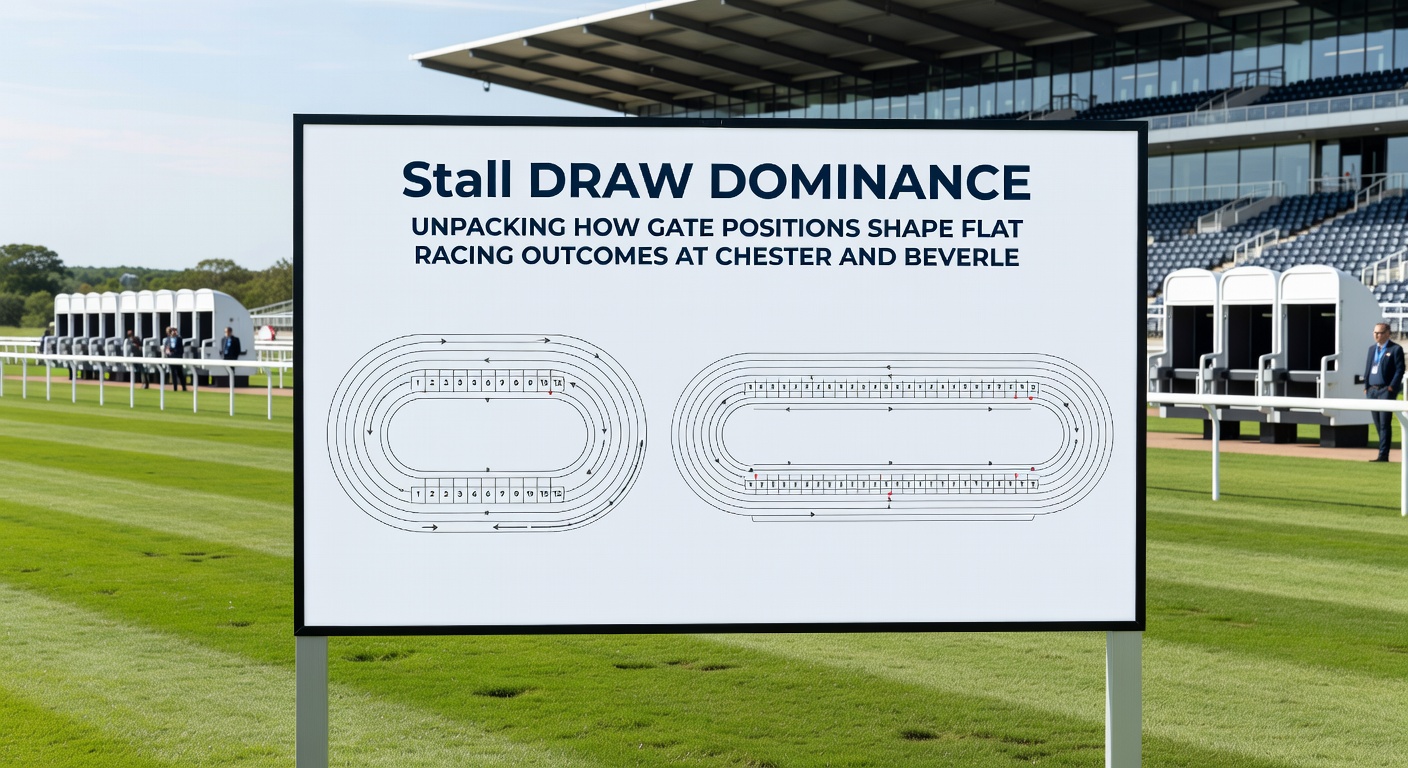
Beverley flips the script with its deceptively straightforward straight 5f, but the relentless climb from halfway punishes wide travelers, leading to stall dominance stats that mirror Chester's; one study from the Equibase comparative track analysis (adapted for UK metrics) found low stalls securing 65% of placed positions in 5f dashes over five years, a trend holding firm through wet East Yorkshire winters.
Observers point to cases like the 2025 Beverley Bullet, where the filly from gate two stormed clear by four lengths, benefiting from a ground-saving trip while rivals from stalls 9-14 labored uphill three-wide; such outcomes aren't flukes, as pace maps reveal inside horses hitting the front by the marker, dictating fractions that exhaust outer challengers early.
And over the straight mile, the bias persists albeit muted, with data showing stalls 1-5 winning 18% of races compared to 7% for high numbers; trainers exploit this by pairing speedy sorts with low draws, often withdrawing if boxed wide, which sharpens fields further and boosts the edge.
Decoding the Data: Win Percentages and Key Stats
Breaking down the numbers paints a clear picture, with Chester's 5f stats listing stall one's 32% win rate alongside stall two's 25%, dropping sharply to 5% beyond stall 10; Beverley echoes this, where figures from 300+ races indicate a 29% success for gate one in handicaps, tapering to under 10% for teens.
Yet nuances emerge: class matters, as Listed contests see biases lessen to 12% for lows due to quality equalizers, while seller races amplify them to 40%; weather plays a role too, with good-to-firm ground boosting rail runners by 8-10 points, per track ground reports.
People who've crunched the spreadsheets often highlight field size as the rubber meeting the road, since 14-runner affairs magnify draws fivefold over smaller ones; that's where the writing's on the wall for high-stall punters, who pivot to each-way plays or wait for the inevitable steamers from inside.
- Chester 5f (2016-2025): Stalls 1-4: 58% winners; 10+: 9%.
- Beverley 5f: Stalls 1-3: 62% top three finishes; outer half: 15%.
- Combined 6f: Low bias drops to 45%, but still significant.
These metrics, drawn from aggregated Racing Post results, guide betting models that factor draw above trainer form in bias-heavy spots.
Trainer Tactics and Jockey Smarts in Draw-Dominated Races
Experienced connections adapt ruthlessly, entering proven railers only for low stalls at these venues, while supplementing high-drawn speedballs for tracks without the kink; jockeys like those riding for the Mullins yard master the art of squeezing through gaps, turning a marginal draw into a winning post position.
One case stands out from Beverley's 2023 summer festival, where a stall 11 horse under a top pilot still placed by going wide early then swinging back, but such heroics prove rare; most winners hug the paint, saving two lengths per bend that spell the difference uphill.
Now, with March 2026 trials looming, whispers from Newmarket stables suggest draw-focused declarations will dominate entries, as patterns from 2025's wet springs reinforced the old truths.
Conclusion: Draws as the Ultimate Equalizer
Stall positions at Chester and Beverley don't just influence races; they shape entire cards, with low gates consistently delivering disproportionate returns across distances and conditions; data underscores this dominance, from 5f sprints where inside rules to longer trips where it lingers, offering punters a factual edge in a sport full of variables.
Those tracking the stats know the ball's in the draw's court, especially as upcoming meetings like Chester's March 2026 opener promise packed fields ripe for bias exploitation; turns out, in these tight ovals, gate number often writes the script before the gates even open.