Referee Assignment Histories and Card Market Dynamics in Lower League Midweek Matches

Data from lower league competitions shows that referee assignment histories create measurable patterns in disciplinary outcomes, particularly during midweek fixtures where squad rotations and fixture congestion alter game dynamics. Observers note that officials with documented histories of higher card averages tend to influence betting markets on yellow cards and total bookings when assigned to League Two or National League matches played on Tuesdays and Wednesdays.
Tracking Referee Histories Across Seasons
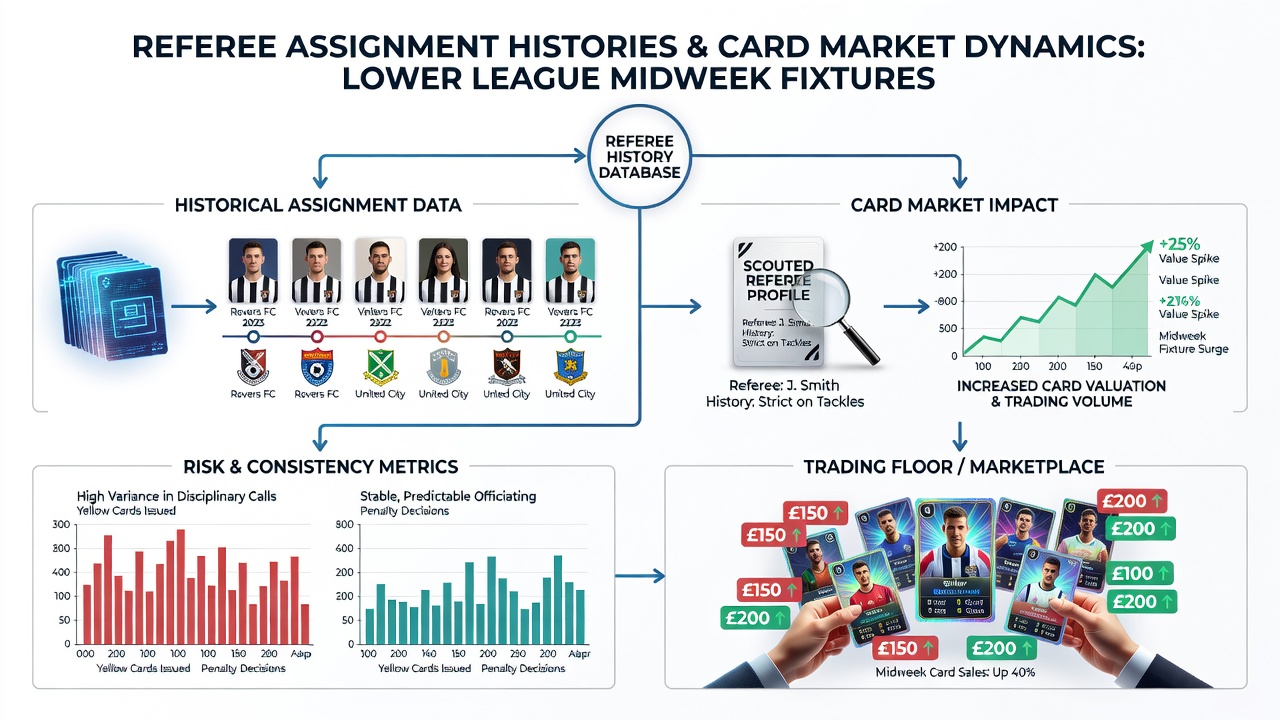
Assignment records compiled over multiple campaigns reveal consistent variations in card issuance rates among officials operating in the lower tiers. Researchers at academic institutions have examined these patterns by cross-referencing fixture lists with post-match disciplinary reports, and studies indicate that certain referees issue 4.2 cards per game on average while others average closer to 3.1 across comparable fixtures. Those who have analyzed assignment data find that midweek games often feature elevated foul counts because teams field less experienced lineups, and this context amplifies the effect of an official's established tendencies.
Betting operators adjust card markets in real time once assignments become public, typically 48 hours before kickoff. Markets on over 4.5 cards move noticeably when an official with a higher historical average receives the appointment, whereas under markets strengthen for referees who maintain lower averages in similar conditions.
Midweek Fixture Characteristics
Midweek lower league schedules create distinct environments compared with weekend rounds. Fixture congestion leads to more defensive setups and increased physical challenges, and data collected through June 2026 demonstrates that total cards rise by approximately 12 percent in these games relative to Saturday fixtures. Referees who have handled multiple midweek assignments in a single month show slight increases in their personal card rates, according to internal league statistics shared with performance analysts.
Market Reactions to Confirmed Assignments
Once governing bodies publish referee appointments, card markets respond within minutes. Traders monitor historical performance against the competing clubs, and adjustments occur faster in lower league markets because liquidity remains thinner than in top-flight competitions. One analysis from the Canadian Soccer Association's performance database highlights parallel trends in domestic lower divisions, where referee consistency directly correlates with pre-match market stability.
Those monitoring odds movements report that early price shifts often exceed 0.25 in the over/under card line when a referee with an extreme historical average enters the equation. Subsequent adjustments incorporate team-specific factors such as recent disciplinary records and player availability.
Regional and Competition Variations
Patterns differ across England's lower divisions. League Two fixtures display stronger correlations between referee history and total cards than National League South games, partly because of higher average attendances and more structured officiating protocols. A Football Federation Australia report on comparable second-tier competitions found that midweek scheduling increased card variance by 18 percent when officials carried forward histories from previous seasons.
League administrators in several European nations have begun publishing detailed referee metrics to promote transparency, and these releases allow market participants to refine models that incorporate assignment histories. The approach mirrors methods used by performance researchers who track foul location data and card timing to identify repeatable behaviors.
Practical Implications for Market Participants
Analysts who build card projections now treat referee assignment as a primary variable rather than a secondary consideration. Models incorporate rolling averages from the previous 12 months alongside venue-specific adjustments, and these calculations produce narrower confidence intervals when historical data remains stable. Midweek lower league games continue to provide the clearest test cases because external variables such as weather and pitch conditions exert less influence than in higher-profile fixtures.
Performance reviews conducted by competition organizers further refine these datasets each season. Officials receive feedback on consistency, and gradual shifts in card rates appear in subsequent assignments, creating ongoing updates for anyone tracking market movements.
Conclusion
Referee assignment histories supply verifiable signals that shape card market pricing in lower league midweek fixtures. Data compiled through June 2026 confirms that these patterns persist across multiple seasons and competitions, while assignment announcements trigger measurable price adjustments. Observers who integrate historical referee metrics with fixture context obtain clearer projections of total cards and booking outcomes in these matches.