Rain's Grip on Strategy: Jockey Adaptations in Wet Weather at UK Regional Venues

Data from meteorological records shows that regional UK tracks experience frequent wet conditions, particularly during autumn and spring meetings, which prompts jockeys to adjust their approaches based on surface changes and visibility factors. Observers note that these adaptations often involve shifts in pacing and positioning as riders respond to altered track consistency and horse reactions under reduced traction.
Atmospheric influences extend beyond simple precipitation to include humidity levels and wind patterns that combine with rain to modify ground firmness at venues like those in the north and west of England. Researchers have documented how these elements create variable going descriptions that jockeys must interpret in real time during races.
Track Surface Dynamics and Rider Responses
Regional circuits such as those in Cumbria and Devon report higher instances of soft or heavy ground after rainfall, leading jockeys to favor routes along the inside rail where drainage patterns tend to stabilize the surface more effectively. Studies indicate that this choice reduces the risk of slips while maintaining momentum, especially in sprints where early positioning determines outcomes. Data collected from race analyses reveals that riders often shorten their stirrups slightly in these scenarios to improve control over the horse's balance on slick patches.
Wind direction plays a supporting role during wet periods because gusts can drive rain into a jockey's face and obscure sightlines at turns. Those who've examined race footage note that this prompts earlier decisions on when to make a move, avoiding prolonged exposure in exposed sections of the course. Evidence from performance metrics suggests such timing adjustments correlate with fewer falls in affected races.
Visibility Factors and Timing Adjustments
Reduced light penetration through cloud cover and rain affects depth perception on the track, causing jockeys to rely more on tactile feedback from the reins and saddle. According to reports from equine research groups in Australia, similar conditions lead to conservative early pacing strategies that preserve energy for later stages when visibility might improve. In UK regional settings this pattern holds as riders space out their challenges to account for sudden changes in footing.
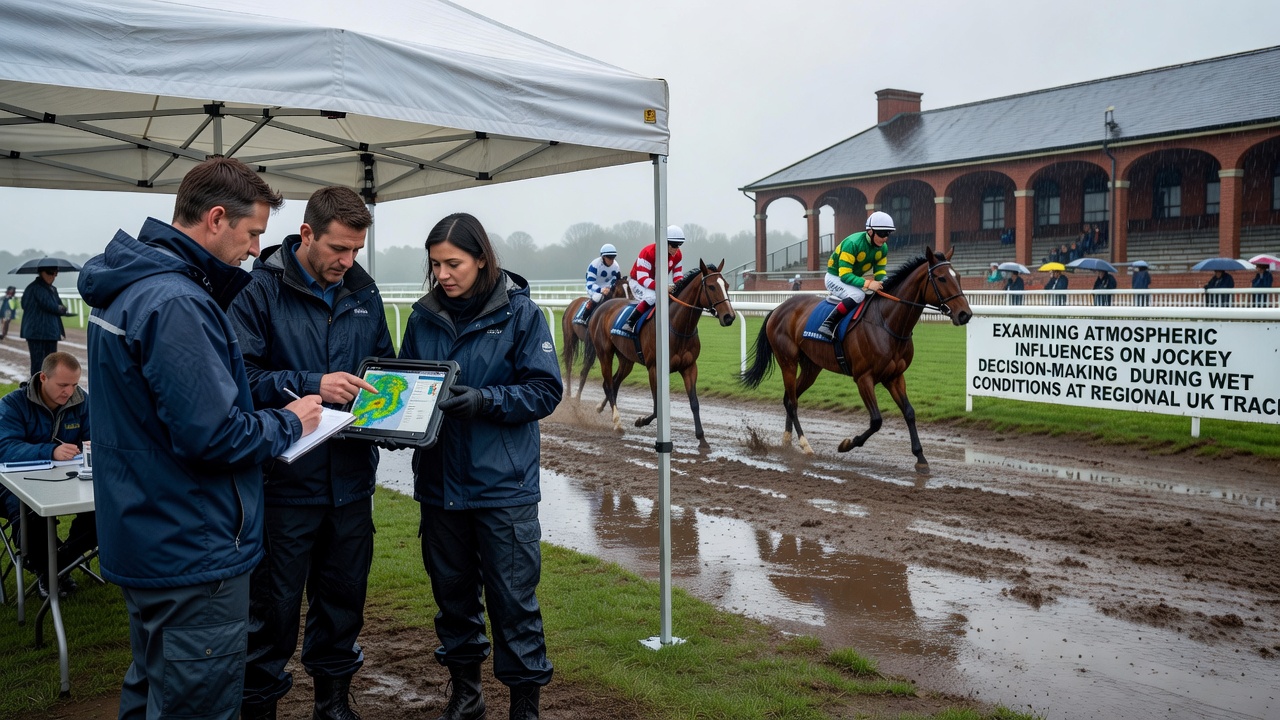
June 2026 brings continued monitoring programs at several northern tracks where sensors now track real-time moisture levels to inform pre-race briefings. These tools allow riders to anticipate how quickly a surface might deteriorate during an event, influencing choices around wide versus rail runs. Performance databases show measurable differences in average race times under these monitored wet conditions compared to dry baselines.
Equine Behavior Under Moisture Stress
Horses exhibit varied responses to rain-soaked ground, with some becoming more cautious in their stride while others accelerate to escape discomfort. Jockeys at venues like those around the Scottish borders adapt by reading these cues early in the race and modulating pressure accordingly. Figures from veterinary monitoring programs indicate that heart rate patterns in horses rise faster on heavy ground, prompting riders to ease off initial efforts to prevent premature fatigue.
One case examined by analysts at a Canadian thoroughbred research center demonstrated how regional UK jockeys in wet events often select horses with proven mud form based on historical data rather than current odds alone. This selection process integrates atmospheric forecasts directly into pre-race planning and alters betting-related discussions among connections without shifting focus from performance realities.
Regional Variations Across UK Circuits
Tracks in flatter eastern areas handle rain differently than those with pronounced undulations in the west, where water pools create isolated hazards. Jockeys report needing distinct mental mapping for each location, adjusting their lines through bends to skirt softer patches. Records compiled over multiple seasons highlight that these localized strategies contribute to higher completion rates when applied consistently.
Atmospheric data combined with race outcomes continues to inform training regimens at regional stables, where simulations of wet-weather scenarios prepare both horse and rider for variable conditions. This preparation emphasizes balance shifts and rein management techniques that have shown results in reduced incident rates during monitored events.
Conclusion
Atmospheric conditions during wet weather at UK regional tracks shape jockey decisions through measurable effects on surface, visibility, and equine responses. Ongoing data collection from multiple sources supports refined approaches that prioritize safety and positioning without introducing external variables. As monitoring expands into 2026, patterns identified across circuits provide clearer frameworks for adaptation in these environments.