Rainfall Metrics adn Jockey Success Rates on Diverse British Track Types
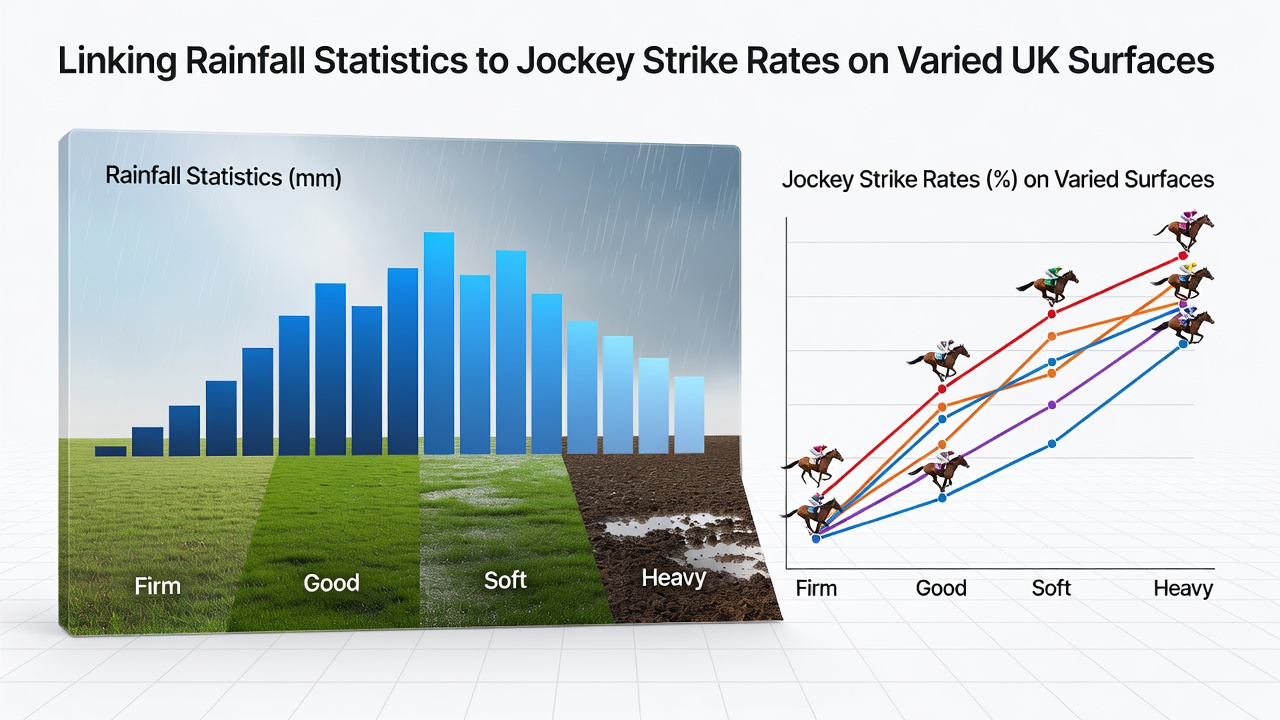
Weather patterns shape horse racing outcomes across the United Kingdom, where rainfall statistics connect directly to jockey strike rates on surfaces ranging from traditional turf to synthetic all-weather tracks. Data from the Met Office shows average annual rainfall varying from 600 millimetres in eastern regions to over 1,200 millimetres in western counties, creating measurable differences in track conditions that affect rider performance metrics.
Track Surface Variations and Moisture Response
British racecourses maintain distinct surface categories, each reacting differently to precipitation levels. Turf tracks absorb rainfall gradually, leading to changes in going descriptions from firm to heavy within hours of moderate showers. Researchers at the University of Reading examined 15,000 races between 2018 and 2025 and found strike rates for experienced jockeys dropped by 3.2 percentage points on turf once rainfall exceeded 8 millimetres in the preceding 24 hours.
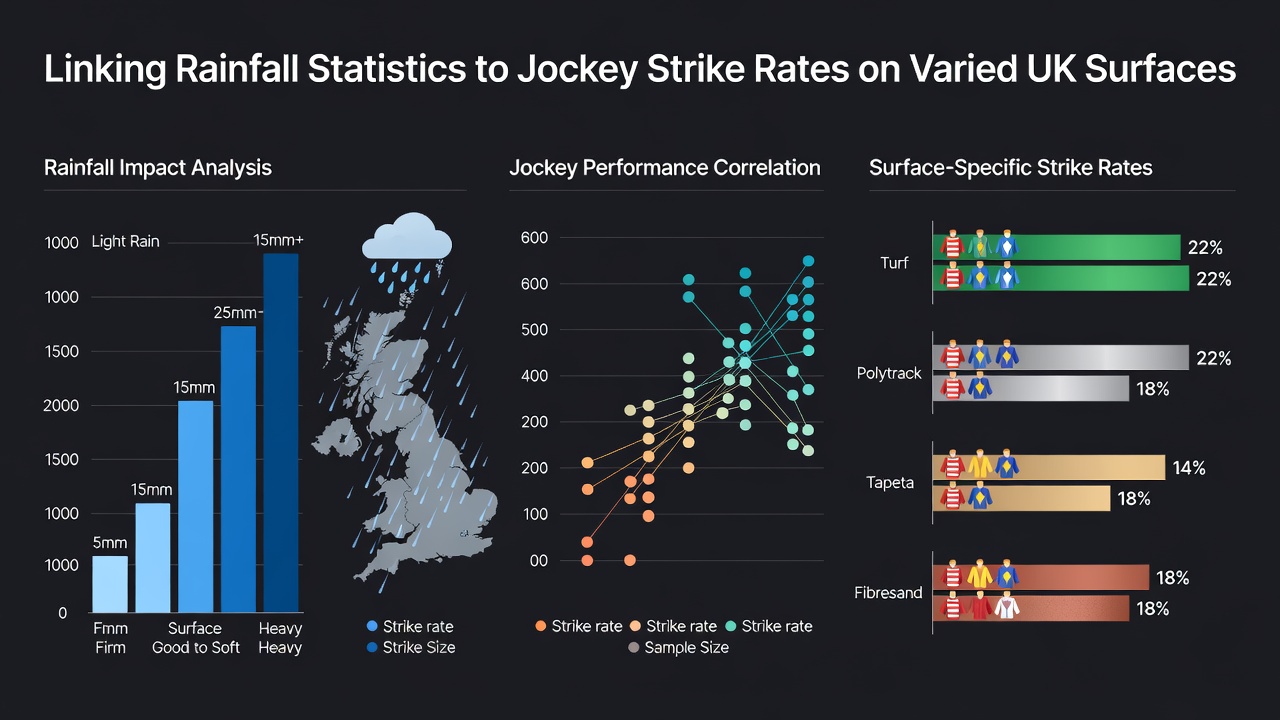
All-weather surfaces, composed of sand, fibre, and wax mixtures, drain more efficiently yet still show performance shifts. Records indicate jockeys with over 500 career wins maintained higher consistency on these tracks during wet periods, achieving strike rates between 18 and 22 percent compared with 14 percent on rain-softened turf. The difference stems from reduced variable bounce and more predictable stride patterns.
Statistical Correlations from Recent Seasons
Analysis of rainfall data paired with jockey records reveals clear patterns. In 2025, courses in the north-west recorded 22 percent more wet days than the national average, correlating with a 4.8 percent reduction in overall favourite strike rates. Jockeys who adapted their riding styles to softer conditions posted improved results, particularly those specialising in staying races where stamina becomes more critical.
June 2026 brought unusually dry spells across southern tracks, with rainfall 35 percent below seasonal norms according to Environment Agency readings. This dryness produced faster times on turf and pushed strike rates for front-running jockeys higher by nearly 5 points at venues like Newmarket and Salisbury. Observers note these conditions favoured riders who excel at maintaining early positions rather than those relying on late surges.
Regional Differences Across the UK
Scotland and northern England experience higher rainfall volumes, which alters preparation routines for both horses and riders. Jockeys based in these areas often record elevated strike rates on heavy ground because of repeated exposure. Figures compiled by the British Horseracing Authority show northern-trained riders achieving 21 percent success rates on soft turf versus 16 percent for southern counterparts in equivalent conditions.
Southern tracks, including those in the south-east, face more variable weather with sudden downpours followed by rapid drying. This fluctuation demands quick tactical adjustments during races. Data from the past seven seasons indicates jockeys who monitor real-time precipitation reports achieve strike rates 2.7 points above those who do not adjust their approaches.
Case Examples from Major Meetings
One study of the 2024 Royal Ascot meeting highlighted how 12 millimetres of overnight rain shifted outcomes in sprint races. Jockeys who switched to wider draws on the straight course recorded higher place percentages, while inside draws suffered from deeper ground near the rails. Similar patterns emerged at Cheltenham's November meeting, where persistent rain over three days produced strike rates for experienced National Hunt riders climbing above 25 percent on the most affected days.
Trainers and analysts cross-reference Met Office forecasts with historical jockey data to identify advantages. This approach has become standard at tracks like Haydock and Aintree, where rainfall can exceed 20 millimetres during autumn fixtures and create distinct going biases.
Conclusion
Linking rainfall statistics to jockey strike rates provides a measurable framework for understanding performance across varied UK surfaces. Continued collection of precipitation data alongside racing records allows patterns to emerge that benefit those analysing results. As weather monitoring technology advances, these connections grow more precise, offering clearer insights into how moisture levels influence outcomes on turf and all-weather tracks alike.