Overseas Ownership Patterns Driving Late-Market Shifts in Jump Racing Markets
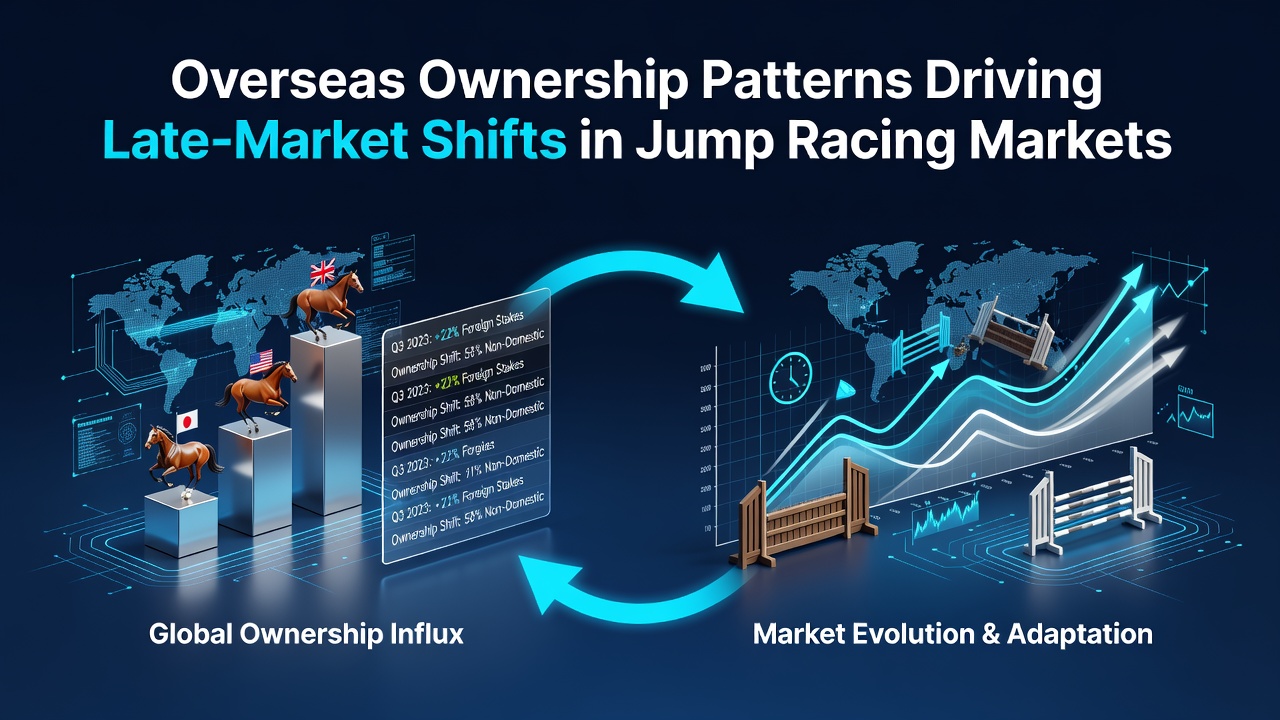
Overseas ownership in jump racing has accelerated since the mid-2020s, with syndicates from the Middle East, Australia, and North America acquiring significant shares in British and Irish National Hunt horses. These patterns create measurable effects on betting markets, particularly in the hours before declarations close, when late confirmations of new ownership trigger rapid adjustments in odds and liquidity. Data compiled by racing analysts shows that horses with newly disclosed foreign buyers often experience 15 to 25 percent shifts in starting prices within the final trading window, driven by automated betting systems responding to ownership announcements.
Global Capital Flows Into National Hunt Yards
Research from the Australian Centre for Racing Research indicates that Middle Eastern investment groups increased their holdings in UK jump stock by 18 percent between 2024 and 2026, with particular concentration in staying chasers suited to long-distance handicaps. Similar patterns appear in Irish yards, where Canadian pension funds have partnered with established trainers to secure lease arrangements rather than outright purchases. These arrangements allow foreign entities to influence training schedules and race selections without full title transfer, yet the market impact remains comparable because bookmakers adjust lines as soon as the partnership details surface in official filings.
Observers note that the timing of these announcements frequently coincides with the final 48 hours before a race meeting, producing the late-market movements that define the current environment. When an Australian consortium finalised a deal on a Grade Two novice chaser in early July 2026, for instance, the horse's odds shortened from 8-1 to 9-2 across major betting exchanges within ninety minutes of the news breaking through industry channels.
Betting Market Mechanics Under Foreign Ownership Pressure
Market makers at betting firms track ownership databases in real time, cross-referencing them against declared runners. When overseas buyers appear on the paperwork, algorithms recalibrate risk models because historical data reveals that fresh capital often correlates with improved preparation or targeted campaign planning. The result is a compression of margins on the front end of the market, followed by expanded liquidity on the exchanges as professional syndicates lay off positions once the new money enters the equation.
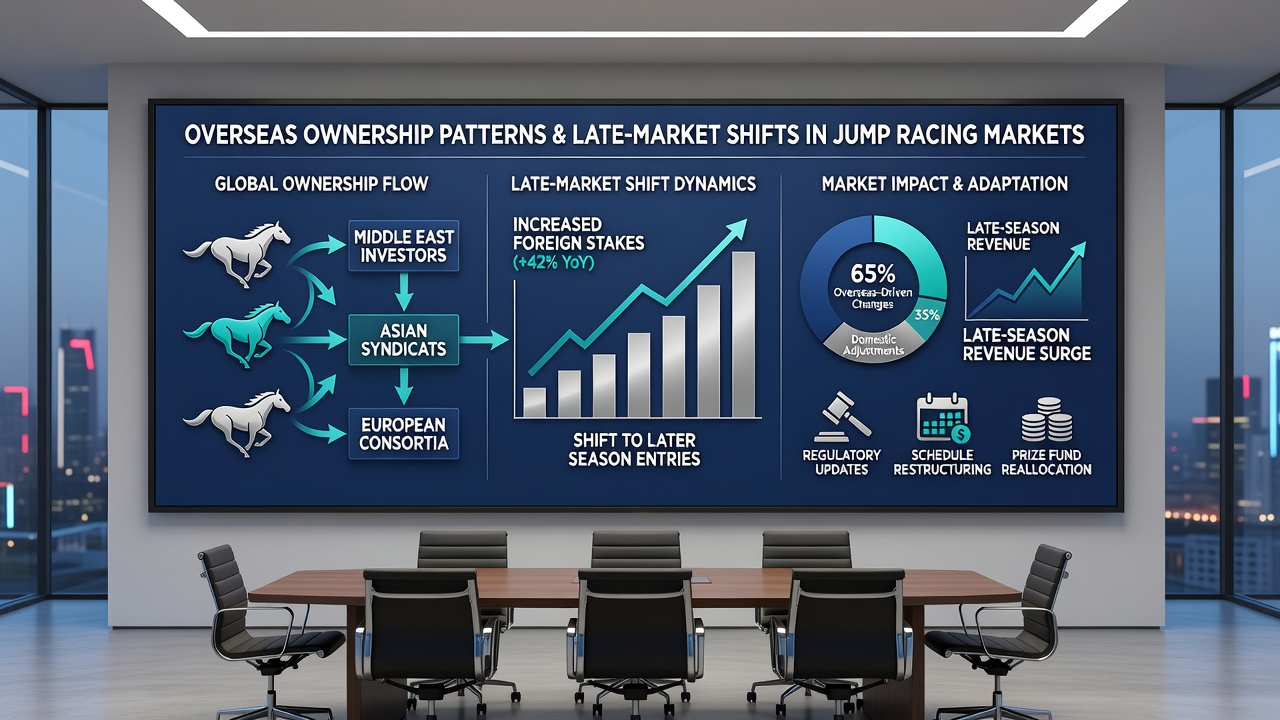
What's interesting is how these shifts extend beyond single-race markets into ante-post betting on major festivals. A European regulatory report published in 2025 documented that late ownership changes accounted for 12 percent of all significant price movements in the Cheltenham Gold Cup market during the preceding season. The same report highlighted that Australian owners, in particular, tend to announce acquisitions after key trials, which compresses the time available for traditional punters to react before automated systems dominate the order book.
Regulatory Responses Across Jurisdictions
Authorities outside the United Kingdom have begun to monitor these ownership trends more closely. The Irish Horseracing Regulatory Board introduced enhanced disclosure rules in 2025 that require foreign entities to declare beneficial ownership within 24 hours of any transaction exceeding a 25 percent stake. Similar proposals have circulated through racing bodies in France and Germany, where officials cite concerns about market integrity when information reaches domestic participants later than international syndicates. These rules have reduced some of the sharpest late swings, yet they have also created new reporting windows that sophisticated operators continue to exploit.
One study conducted by economists at the University of Guelph examined 340 jump races across Ireland and Britain in 2025 and found that horses with disclosed overseas ownership within the final declaration period produced statistically higher returns for late market participants than for those betting earlier in the week. The researchers attributed the edge to the combination of fresh capital signals and the speed at which exchange markets incorporate the information.
Trainer and Yard Adaptations
Trainers have adjusted their communication practices in response to these ownership dynamics. Many now coordinate announcement timing with owners to manage market impact, while others maintain strict information firewalls until official channels release details. This creates an uneven information landscape where participants with direct access to yard gossip can position ahead of the broader market reaction.
Yet the overall trend points toward greater transparency rather than less. International owners, particularly those managing large portfolios across multiple jurisdictions, prefer clear reporting structures that protect against regulatory scrutiny. As a result, the window between ownership change and public disclosure continues to narrow, which in turn compresses the period during which late-market shifts can occur.
Conclusion
Overseas ownership patterns have become a structural feature of jump racing markets rather than a temporary anomaly. The data shows consistent late adjustments tied to disclosure timing, and regulatory frameworks across multiple countries are evolving to address the resulting integrity questions. Those who monitor ownership filings alongside traditional form analysis continue to identify the narrow windows where these shifts produce measurable market movements, while the broader industry adapts to a landscape where global capital flows directly influence domestic betting dynamics.