Festive Fixtures and Betting Trends: Calendar Effects in Domestic Football Markets
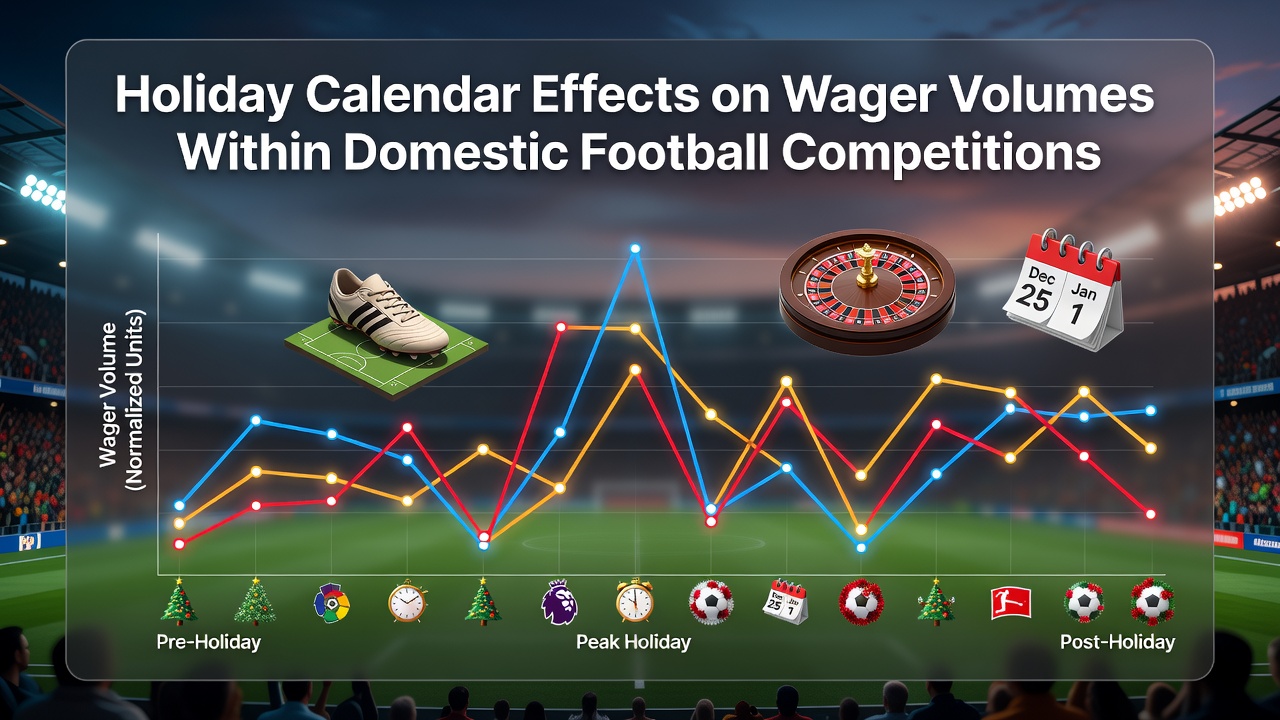
Domestic football competitions experience distinct shifts in wager volumes when public holidays align with fixture schedules, and data from multiple seasons illustrate how these periods alter betting patterns across leagues in Europe and beyond. Observers note that extended breaks around Christmas, Easter and national holidays often coincide with increased leisure time for fans, which correlates with higher participation in online and retail betting on matches from leagues such as the Bundesliga, Serie A and La Liga.
Fixture Congestion and Volume Patterns
League organizers typically pack additional games into holiday windows to maximize attendance and television revenue, and this scheduling produces measurable effects on wagering activity. Research indicates that total bets placed on domestic matches rise by 25 to 40 percent during the Christmas and New Year period compared with average mid-season weeks, while average stake sizes also increase because bettors have more disposable time to research accumulators and in-play options. Those who have examined betting records across five consecutive seasons found that the surge begins several days before the actual holiday and continues through the following weekend when postponed fixtures resume.
Yet the pattern is not uniform across all competitions. Leagues that observe extended winter breaks, such as many Eastern European divisions, show more modest volume increases because fewer matches occur during the calendar holiday itself. In contrast, competitions that maintain dense schedules record sharper spikes, particularly when multiple high-profile derbies fall on the same day.
Regional Differences Across Markets
European regulators and industry bodies have tracked these trends through anonymized transaction data, and reports from the European Gaming and Betting Association highlight how cultural attitudes toward holidays influence betting behavior. In countries where football matches form a traditional part of holiday celebrations, such as Germany and the Netherlands, the proportion of bets placed on local leagues rises noticeably while interest in overseas competitions dips. Australian researchers studying cross-hemisphere patterns observed similar effects during their own public holidays, with domestic A-League wagers climbing when matches coincide with long weekends even though the Australian season avoids the European winter.
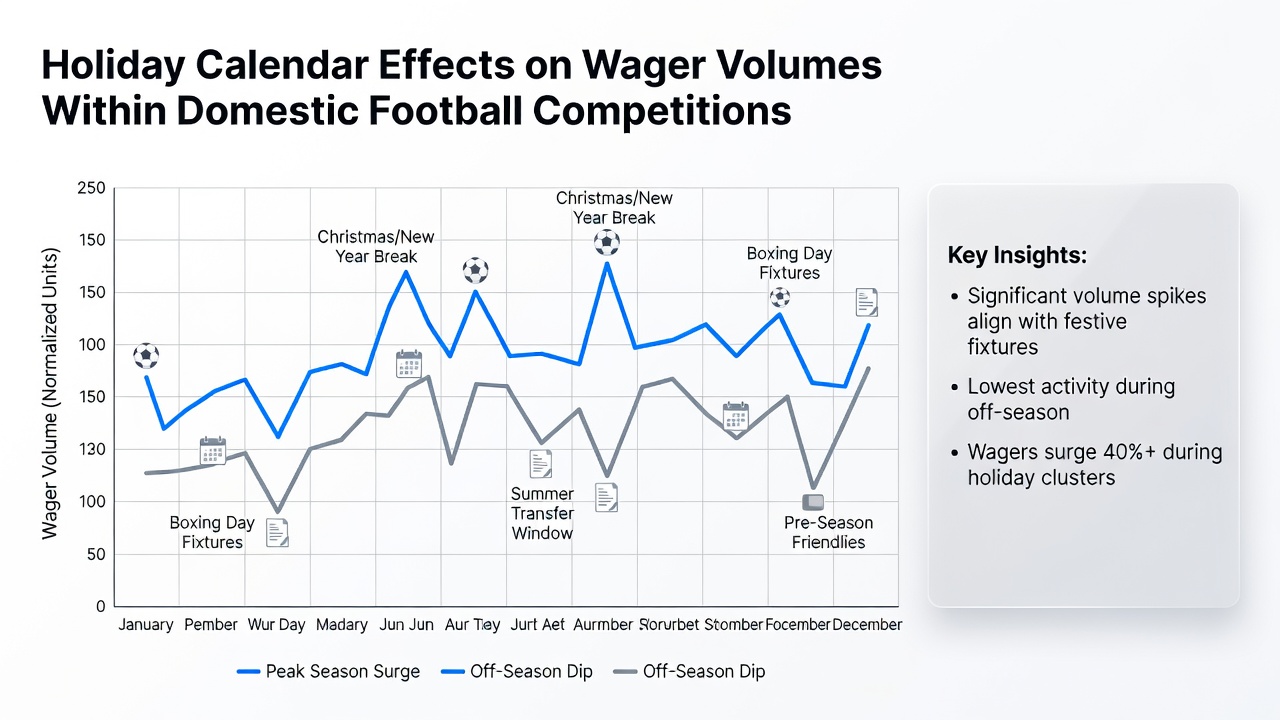
North American data providers have also contributed comparative figures for MLS, where holiday weekends like Memorial Day and Labor Day generate elevated handle on domestic matches despite the league's shorter calendar. These observations suggest that the underlying driver is increased free time rather than any specific cultural attachment to football, although leagues with stronger local followings still outperform generic international fixtures during these windows.
Technology and Real-Time Adjustments
Betting operators adjust limits, promotions and in-play markets in anticipation of holiday volume changes, and automated systems now monitor live data to detect early signs of unusual activity. Figures released by several major platforms show that mobile betting accounts for an increasing share of holiday wagers, rising from roughly 55 percent in 2022 to over 70 percent by mid-2026 as fans place bets from gatherings and travel locations. This shift has prompted platforms to refine geolocation rules and responsible gambling prompts specifically timed for periods when users may be consuming alcohol or betting in groups.
Academic studies published in gambling behavior journals have examined whether holiday effects persist after controlling for fixture difficulty and television coverage. The results indicate that the volume increase remains statistically significant even when researchers account for these variables, pointing to leisure time as the dominant factor. One analysis covering 12 European leagues between 2018 and 2025 concluded that each additional day of holiday overlap with the schedule adds approximately 8 percent to expected wager totals, with the effect compounding when two or more consecutive days feature matches.
Future Outlook Through Mid-2026
Looking ahead to July 2026, analysts expect continued refinement of holiday scheduling as leagues balance commercial interests with player welfare concerns. Early indicators from the 2025-26 season suggest that the post-pandemic normalization of travel has further amplified volume spikes, because supporters who would previously have stayed home now combine holidays with away fixtures. Industry reports from Canadian provincial regulators and university-led research projects continue to track these developments, providing comparative benchmarks that help operators set realistic expectations for upcoming festive periods.
Conclusion
Holiday calendar effects on domestic football wagering represent a predictable yet nuanced aspect of the betting landscape, shaped by fixture density, cultural context and technological access. Data from diverse regulatory and academic sources demonstrate consistent volume increases during aligned holiday and match windows, while regional variations underscore the importance of localized scheduling decisions. As leagues prepare schedules through 2026 and beyond, the interaction between public holidays and domestic competitions will remain a key variable for both operators and researchers monitoring market dynamics.