Breeding Line Insights: Seasonal Performance Patterns in Novice Chase Fields

Breeding line analysis examines pedigree records to identify horses whose bloodlines align with success in novice chase markets across different parts of the season, and data from multiple racing jurisdictions shows measurable patterns in how certain lineages perform when runners step up from hurdles or flat races. Analysts compile sire and dam statistics from official results databases, then cross-reference those figures against ground conditions, race distances, and monthly distributions to isolate value opportunities before markets adjust.
Core Components of Lineage Evaluation
Pedigree researchers focus on the first three generations of a horse's ancestry, tracking win rates for progeny in novice chases during autumn, winter, and spring campaigns, while they also note how specific stallions pass on traits such as stamina or jumping efficiency that become evident only after horses mature into their fourth or fifth year. According to records maintained by Racing Australia, progeny from certain Northern Hemisphere sires demonstrate elevated strike rates in southern hemisphere novice events when those races occur between June and August, creating measurable edges for bettors who monitor export and import patterns.
Seasonal Shifts in Performance Data
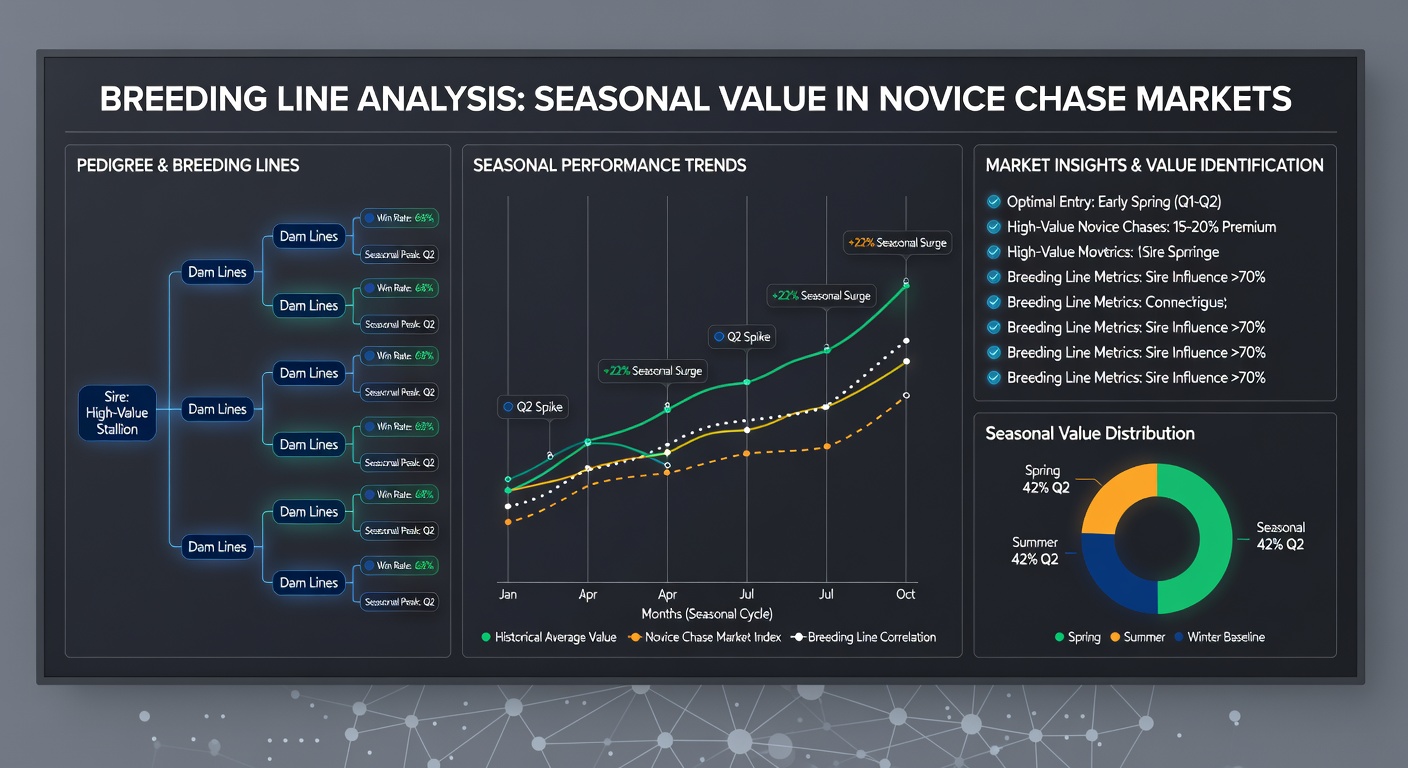
Performance statistics shift noticeably once the calendar moves past the initial novice period, and observers note that lines carrying strong influences from stayers tend to improve markedly between January and March, whereas speed-oriented bloodlines peak earlier in the season and then taper. Studies published in the Equine Veterinary Journal have tracked thousands of runners and found that horses with dam lines tracing to proven chasers post higher completion rates over fences when the ground softens after mid-winter, while those with flatter pedigrees show better results on firmer surfaces typical of early autumn fixtures.
What's interesting is how these patterns repeat across jurisdictions, and trainers in Ireland and France have supplied data to the Irish Horseracing Regulatory Board showing that certain French-bred lines excel in British novice chases during the March to May window, particularly when distances stretch beyond two and a half miles. This information allows market participants to compare current entries against historical benchmarks rather than relying solely on recent form.
Practical Application in Market Analysis
Market analysts integrate breeding data into pricing models by assigning seasonal multipliers to each runner's pedigree profile, and these adjustments often reveal discrepancies between public odds and statistical expectation during the quieter months of June 2026 when fewer novice events appear on cards. One study released by the Jockey Club's Equine Injury Database in the United States illustrated parallel trends in American timber racing, confirming that lineage-based filtering improves identification of long-term value even when local conditions differ from European tracks.
Trainers who maintain detailed breeding spreadsheets frequently reference these datasets before entering horses in novice chases, and the approach has produced documented clusters of winners whose pedigrees matched the prevailing seasonal profile at tracks such as Cheltenham, Aintree, and Punchestown. Observers note that the same methodology extends to national hunt breeding programs in Canada, where Agriculture and Agri-Food Canada reports highlight how imported bloodlines adapt to colder-weather fixtures between November and February.
Case Examples from Recent Campaigns
Take the progeny of one prominent sire whose offspring recorded a 28 percent strike rate in novice chases during the 2024-2025 winter months, according to aggregated results from teh British Horseracing Authority database, while the same line posted lower figures when races occurred on summer ground. Another example involves a dam line that produced multiple scorers in Irish novice events during April and May, prompting analysts to monitor similar pedigrees for the corresponding period in 2026.
These clusters emerge because certain genetic combinations confer advantages in recovery time between runs or adaptability to changing ground conditions, and researchers continue to refine the datasets by incorporating new runners each season. The process remains data-driven, relying on verified results rather than anecdotal observation.
Conclusion
Breeding line analysis supplies a structured framework for evaluating seasonal value in novice chase markets, and the combination of pedigree records, monthly performance splits, and cross-jurisdictional comparisons continues to inform selection processes for those who track official statistics. As more racing authorities publish granular data, the method gains additional precision without requiring subjective interpretation beyond the numbers themselves.